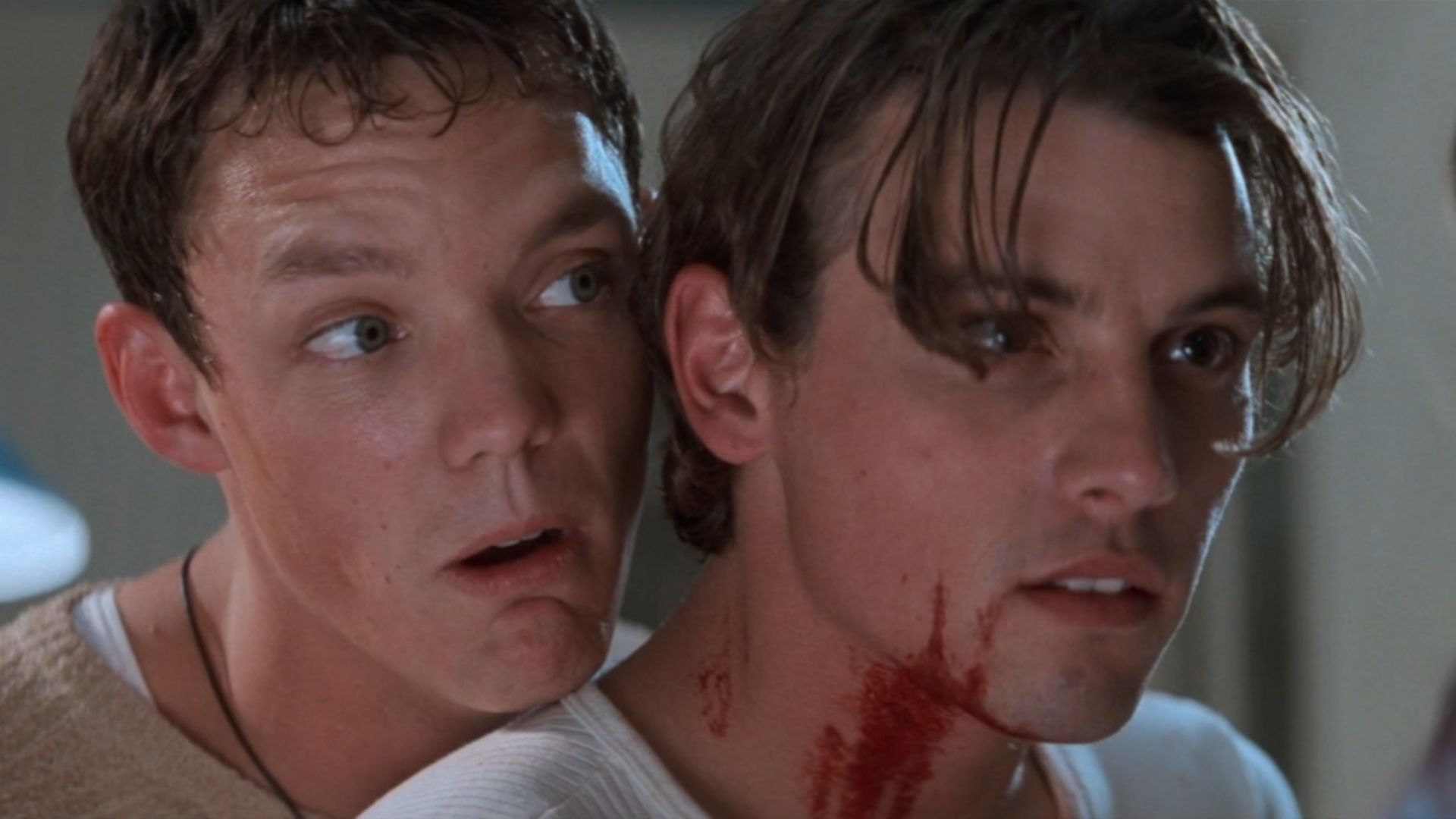
You don’t need to watch more than ten minutes of Succession to understand Brian Cox embodies authority. But that’s the character—Logan Roy. The real question, the one fans whisper after episodes air, is: what is Brian Cox really like? Especially now, amid acclaim for his new film Glenorothan and a string of high-profile interviews that have cemented his reputation as Hollywood’s most outspoken star.
He’s not just an actor. He’s a force—equal parts intellect, ire, and integrity. And those who’ve worked with him, especially on Glenorothan, say the man behind the mic doesn’t disappoint.
The Man Behind the Myth: Brian Cox Beyond Logan Roy
Logan Roy cast a long shadow. A ruthless media tycoon, emotionally detached and politically shrewd, Roy became a cultural archetype. But Cox is no caricature. On set, he’s known for precision—rehearsing lines like a stage veteran, dissecting motivations before stepping into the frame.
During production of Glenorothan, a psychological thriller set in rural Scotland, director Mira Kael noted Cox arrived with annotated scripts, not just for his role, but for supporting characters. “He asked questions about motivations no one else had considered,” she said in a recent Variety interview. “It wasn’t ego. It was investment.”
That investment stems from a career spanning five decades—over 100 screen credits, Broadway runs, Royal Shakespeare Company performances. Cox doesn’t do roles. He inhabits them. And unlike many A-listers, he refuses to separate art from discourse.
Filming Glenorothan: What Co-Stars Say About Brian Cox
Glenorothan—a haunting tale of inherited guilt and fractured family legacy—was shot on location in the Scottish Highlands. The terrain was unforgiving: rain, mud, isolation. But cast members say Cox was a steadying presence.
Emily Haldane, who plays his estranged daughter in the film, recalled how Cox would lead morning ensemble readings—voluntarily. “He wasn’t contractually obligated to do that,” she said. “But he believed the group needed to ‘breathe the same air.’ That kind of leadership isn’t common.”
But don’t mistake kindness for softness. Cox is direct—sometimes blunt. One junior crew member admitted flubbing a lighting cue during an emotionally charged scene. Instead of patience, Cox responded: “If you can’t see the goddamn pain in her eyes, you’re not looking.” Harsh? Yes. But the next take, according to Haldane, was “perfect.”

It’s this duality—compassion and confrontation—that defines his off-camera persona. He’ll hand you a cup of tea, then challenge your worldview in the same breath.
The Rise of Hollywood’s Most Outspoken Star
Cox didn’t start as a pundit. He began as a working actor from Dundee, raised in a tenement, losing his father at age 12. His ascent was slow, earned through theater and British television. But Succession catapulted him into global stardom—and with it, a platform.
What distinguishes Cox now isn’t just fame. It’s his refusal to be silenced. He’s taken on Hollywood’s obsession with youth, the erosion of class narratives in film, and even criticized his own industry’s “celebrity worship.”
In a 2023 Guardian interview, he dismissed the idea of “legacy franchises” like Marvel, calling them “emotional junk food.” In another, he challenged actors who avoid political speech: “If you’re not angry, you’re not paying attention.”
These aren’t soundbites. They’re consistent themes in his public commentary. And they’ve earned him respect—even from those who disagree.
Brian Cox on Power, Legacy, and the Illusion of Control
Glenorothan echoes many of Cox’s real-world concerns. His character, Alasdair Murchison, is a retired judge returning to his ancestral home, only to be confronted by secrets his family buried for generations. Themes of power, denial, and moral compromise run deep.
“I see Alasdair as a man who once believed in systems,” Cox said in a post-screening Q&A. “But systems are built by people. And people are fallible. Dangerous, even.”
Sound familiar? It should. It’s a near mirror of his views on corporate and political power. He doesn’t play tyrants because he romanticizes them. He plays them to dissect them.
On Succession, he once said of Logan Roy: “He doesn’t love power. He’s terrified of not having it.” That insight didn’t come from a writer’s room. It came from Cox’s decades of observing real power—how it isolates, corrupts, and consumes.
The Contradictions That Define Him
Cox is a walking contradiction—and that’s what makes him compelling.
- He champions working-class stories but lives in upstate New York.
- He rails against fame but attends premieres in tailored suits.
- He distrusts institutions but teaches at universities and supports arts funding.

These aren’t hypocrisies. They’re acknowledgments of complexity. In a New Yorker profile, he admitted: “I’m not a saint. I’m a man who’s seen enough to know that simple answers are lies.”
That honesty resonates on set. Actors on Glenorothan said Cox encouraged improvisation—not for flair, but for truth. In one pivotal scene, he deviated from the script, breaking down in silence rather than delivering a monologue. The director kept it in. “It felt more real than any words could,” said cinematographer Lena Cho.
Why His Candor Resonates in Today’s Hollywood
In an era of curated Instagram lives and scripted red-carpet answers, Cox’s rawness is radical.
Other stars tiptoe around controversy. Cox charges into it. He’s criticized U.S. foreign policy, called out ageism in casting, and openly discussed his battles with depression and alcohol.
When asked about cancel culture in a recent podcast, he didn’t dodge. “Accountability is good. But punishment without understanding? That’s just another form of tyranny.”
He’s not trying to win popularity contests. He’s trying to start conversations. And in an industry where silence is often safer, that courage is rare.
The Legacy He’s Building—Beyond the Screen
Cox isn’t just leaving behind a filmography. He’s shaping a standard.
Young actors cite him as a model—not just for technique, but for integrity. At the 2023 Edinburgh Film Festival, a student asked him: “How do you stay true in an industry that rewards conformity?”
His answer? “By remembering who put you in that room. Was it the audience? Or the algorithm?”
Glenorothan may not be a billion-dollar blockbuster. But it’s the kind of film that lingers. Like Cox himself—uncomfortable, unforgettable, undiminished.
Final Take: What You Need to Know About the Real Brian Cox
Brian Cox isn’t just a great actor. He’s a cultural commentator with a performer’s precision and a philosopher’s gaze.
He’s tough, yes—but not unkind. Opinionated, certainly—but not closed-minded. He challenges crews, co-stars, and audiences not to provoke, but to provoke thought.
If you’re looking for a Hollywood star who fits the mold—charming, polished, apolitical—Cox isn’t your man. But if you value authenticity over approval, depth over dazzle, then Cox is exactly what modern cinema needs.
On the set of Glenorothan, they reportedly had a standing rule: no flattery. “Brian hates it,” one assistant said. “He’d rather hear what’s wrong than what’s right.”
That’s the essence of the man. Not flawless. Fully present. And utterly, uncompromisingly real.
Frequently Asked Questions
What is Brian Cox’s most famous role? Brian Cox is best known for playing Logan Roy in Succession, a role that earned him critical acclaim and a Golden Globe.
Is Brian Cox really as outspoken as he seems? Yes. His public interviews, speeches, and social commentary consistently reflect strong, unfiltered opinions on politics, culture, and the film industry.
What is Glenorothan about? Glenorothan is a psychological drama following a retired judge who returns to his family’s remote estate, confronting long-buried secrets and fractured relationships.
How does Brian Cox prepare for his roles? Cox is known for deep character research, script annotation, and collaborative rehearsal—he often studies not just his role, but the entire narrative structure.
Has Brian Cox won major acting awards? While he hasn’t won an Oscar, Cox has received numerous accolades, including a Golden Globe for Succession and multiple BAFTA and Olivier Award nominations.
Is Brian Cox involved in political activism? He’s politically vocal, supporting progressive causes, criticizing militarism, and advocating for arts funding, though he’s not formally tied to a single movement.
Where is Brian Cox from? He was born and raised in Dundee, Scotland, and maintains strong ties to his Scottish roots, often filming and speaking there.
FAQ
What should you look for in What Brian Cox Is Really Like On and Off Screen? Focus on relevance, practical value, and how well the solution matches real user intent.
Is What Brian Cox Is Really Like On and Off Screen suitable for beginners? That depends on the workflow, but a clear step-by-step approach usually makes it easier to start.
How do you compare options around What Brian Cox Is Really Like On and Off Screen? Compare features, trust signals, limitations, pricing, and ease of implementation.
What mistakes should you avoid? Avoid generic choices, weak validation, and decisions based only on marketing claims.
What is the next best step? Shortlist the most relevant options, validate them quickly, and refine from real-world results.