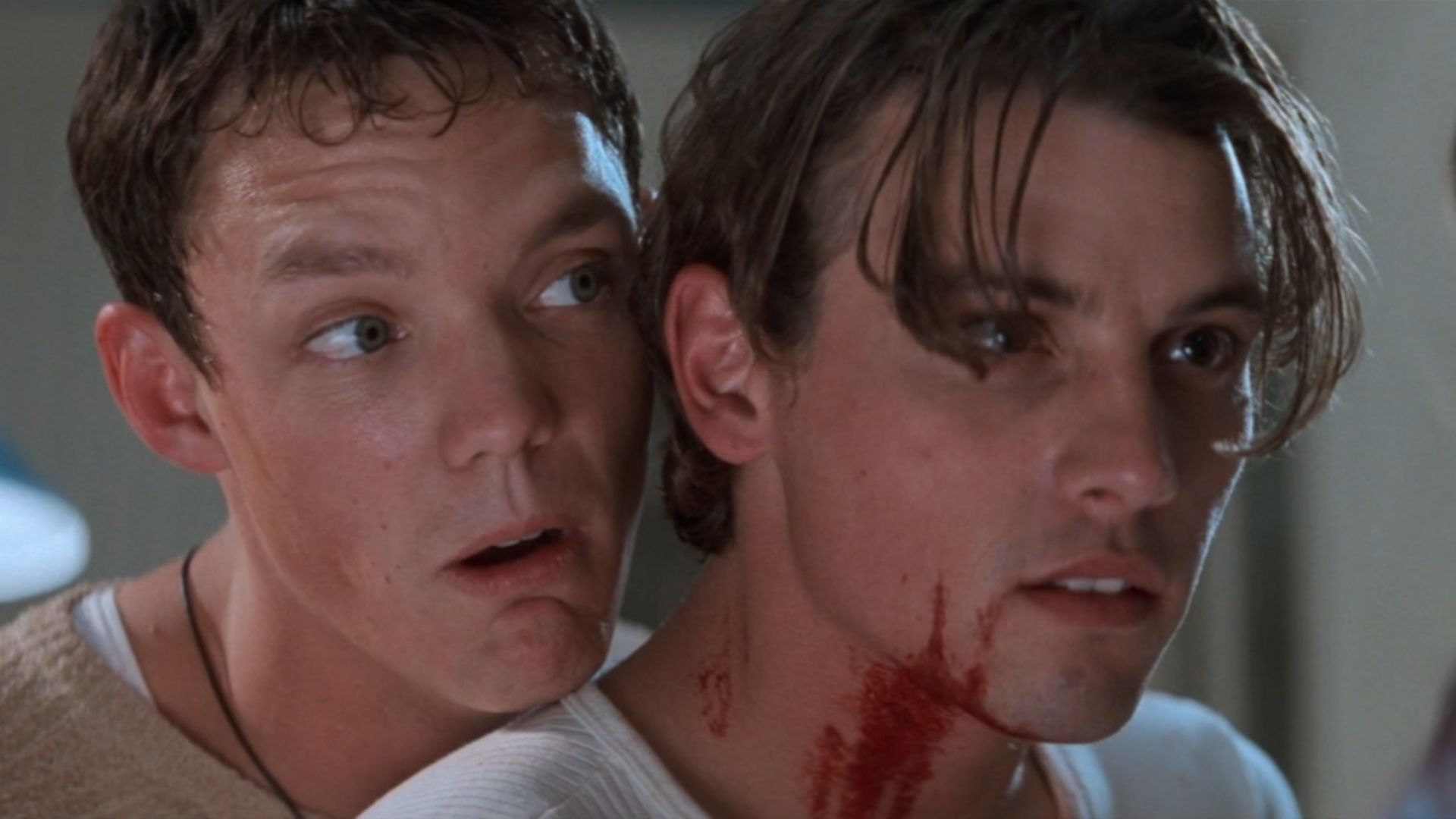
Hollywood doesn’t do second chances based on goodwill. It does them based on recognition, revenue potential, and the warm, fuzzy pull of nostalgia. For Matthew Lillard, the man behind some of the most memorable quirks in 90s cinema, his recent return to the spotlight isn’t evidence of a long-overdue critical redemption—it’s proof that the past sells. And Lillard knows it.
In candid interviews over the past few years, Lillard has expressed a striking self-awareness: “I don’t think anyone really likes me,” he once said. “They just miss the old times.” That blunt honesty cuts through the usual Hollywood platitudes. It’s not bitterness. It’s insight. And it reveals a deeper truth about how the entertainment industry operates today.
The Return of the ‘90s Weirdo
Matthew Lillard didn’t just appear in 90s movies—he embodied a certain kind of off-kilter energy that defined a generation of character acting. From the frantic, wide-eyed stoner in SLC Punk! to the nervous, scene-stealing Dewey Riley in Scream, Lillard played characters who were chaotic but never cartoonish. He brought authenticity to roles that easily could have slipped into parody.
But after the 2000s, Lillard’s presence in major films dwindled. The roles dried up. The invites stopped coming. And yet, over the past decade—and especially with the 2022 Scream reboot and its sequel—Lillard has reentered the cultural conversation. Not as a new discovery. Not as a revitalized star. But as a callback.
And he knows it.
“I’m not naive,” Lillard said in a 2023 interview. “When they call me for Scream, it’s not because they suddenly rediscovered my range. It’s because people want to see Dewey again. They want to feel that connection to something that felt real back then.”
That’s not a complaint. It’s an observation. One that many actors of his era quietly share but rarely voice.
Nostalgia as Currency in Modern Hollywood
Today’s Hollywood runs on franchises, reboots, and legacy sequels. Studios aren’t gambling on unknowns—they’re cashing in on known emotional triggers. Think of Top Gun: Maverick, the Creed series, or the Jurassic World trilogy. These aren’t just sequels. They’re emotional transactions.
Lillard’s return fits this mold. Dewey Riley wasn’t the hero of Scream, but he was the heart. His bumbling charm, awkward romance with Gale Weathers, and eventual rise from comic relief to reluctant hero gave audiences someone to root for. When the new Scream films brought him back, it wasn’t just about continuity—it was about comfort.
And Lillard understands that comfort isn’t about him as a person. It’s about what he represents.
“I think people miss that time,” he said. “Not me specifically. They miss being 17, watching Scream at a sleepover. They miss the music, the fashion, the way movies felt before everything got so polished. I’m just the guy who happens to be attached to that memory.”

That detachment is telling. It shows a man who’s stepped outside the ego-driven machine of Hollywood and seen the mechanics for what they are.
The Emotional Economics of a Callback
There’s a financial term for this: nostalgia premium. It’s the extra value consumers place on things tied to their past. A 1995 video game re-released in 2023 isn’t just entertainment—it’s a time capsule. The same goes for actors.
Studios aren’t hiring Matthew Lillard because he’s suddenly in demand as a leading man. They’re hiring him because his face triggers a dopamine hit in an audience that’s spent two decades aging alongside his characters.
Compare that to other 90s actors who’ve seen resurgence:
- Neve Campbell returned as Sidney Prescott—again, not because of a new acting award, but because Sidney is Scream.
- Freddie Prinze Jr. reappeared in Scooby-Doo voice projects and Legally Blonde discussions, not for reinvention, but for remembrance.
- Tara Reid remains a punchline in many circles—yet still gets cast, not for talent, but for recognition.
Lillard stands out because he’s honest about it. While others lean into reinvention narratives, he admits: “I’m not fooling myself. I’m here because people remember.”
The Risk of Being a Nostalgia Act
There’s danger in this kind of comeback. Being tied too closely to the past can trap an actor in a loop of diminishing returns. Audiences may love the callback—but will they love you?
Lillard has faced this before. After Scream, he starred in Without a Compass and The Descendants, but those roles didn’t break through. His work in voice acting—especially as Shaggy in numerous Scooby-Doo projects—has been consistent, but again, it’s nostalgic.
The risk? Becoming a caricature of your younger self.
Some actors fight this. Others embrace it. Lillard seems to be doing something rarer: acknowledging it while still participating.
“I’m not ashamed of being Dewey,” he said. “I’m proud of that role. But I also know that if Scream hadn’t become a franchise, I wouldn’t be doing press tours right now.”
That kind of clarity is rare in an industry built on illusion.
Why His Honesty Resonates
In an era of hyper-curated celebrity personas, Lillard’s candidness is refreshing. He’s not pretending his comeback is about artistic evolution. He’s not claiming Hollywood finally “gets” him. He’s saying: They miss the past, and I’m a vessel for it.
And that honesty makes him more likable—not despite the nostalgia, but because of how he confronts it.
Other actors might take offense at the idea that they’re only valued for their past. But Lillard treats it like a job. “Look,” he said, “if they want me to step back into Dewey’s shoes and help people feel something they haven’t felt in 25 years, I’ll do it. And I’ll do it well.”
That’s not resignation. It’s professionalism.
Can Nostalgia Sustain a Career?
The bigger question isn’t whether nostalgia brought Lillard back—it’s whether it can keep him there.

Franchises have lifespans. Eventually, even the most beloved legacy characters get retired. Scream 7 might not need Dewey. Or it might reframe him in a way that feels forced. And when that happens, what’s next?
Lillard’s path forward might lie in leveraging his recognition to pivot into roles that honor his past without being chained to it. Imagine him as a mentor figure in a new horror project—someone who references the 90s but isn’t defined by it. Or a director. He’s already directed episodes of TV and independent films.
His self-awareness could be his greatest asset. Because while audiences may miss the old times, they also respond to authenticity. And in a world of reboots and algorithms, Lillard’s raw take on his own relevance cuts through the noise.
The Bittersweet Truth About Comebacks
Matthew Lillard’s story isn’t unique. It’s a mirror held up to Hollywood’s current identity crisis. The industry is mining the past because it’s afraid of the future. It’s easier to revive Dewey Riley than to create a new character with half his charm.
And for actors like Lillard, that means walking a tightrope. You get to work. You get seen. But you also have to accept that your value is, in part, emotional—not just artistic.
“I don’t think anyone really likes me,” he said. “They just miss the old times.”
It sounds sad. But it’s also empowering. Because by naming the game, he’s no longer just a piece on the board. He’s a player who sees the whole table.
And that kind of awareness? That’s timeless.
Final Thought: Nostalgia may have opened the door for Matthew Lillard’s return—but it’s his honesty, humor, and humility that will determine how long he stays. If Hollywood keeps recycling the past, actors who understand the game will be the ones who survive it. Lillard isn’t just along for the ride. He’s the one narrating it.
FAQ:
Why does Matthew Lillard believe nostalgia is behind his Hollywood return? He’s observed that his recent roles, especially in the Scream franchise, rely heavily on audience connection to his past performances—not new demand for his current work.
Has Matthew Lillard been critical of Hollywood’s reliance on nostalgia? Not exactly. He’s not hostile, but he’s candid. He sees it as a reality of the industry, not a betrayal.
Is Matthew Lillard still acting beyond nostalgic roles? Yes. He continues voice work, independent films, and TV appearances, though his highest-profile roles remain tied to legacy franchises.
What role made Matthew Lillard famous? His breakout role was Stu Macher in Scream (1996), followed by fan-favorite performances in SLC Punk! and as Shaggy in Scooby-Doo films.
Does nostalgia guarantee long-term career success for actors? No. While it can revive interest, sustained success usually requires reinvention, new material, or expansion into other roles behind the camera.
How has the public responded to Lillard’s honesty about fame? Very positively. Fans and critics alike appreciate his lack of pretense in an industry often defined by ego.
Could Lillard transition into directing or producing? He already has—he directed the film Fat Kid Rules the World and TV episodes. Many see this as a natural next phase beyond on-screen nostalgia roles.
FAQ
What should you look for in Matthew Lillard on Nostalgia and Hollywood’s Comeback Call? Focus on relevance, practical value, and how well the solution matches real user intent.
Is Matthew Lillard on Nostalgia and Hollywood’s Comeback Call suitable for beginners? That depends on the workflow, but a clear step-by-step approach usually makes it easier to start.
How do you compare options around Matthew Lillard on Nostalgia and Hollywood’s Comeback Call? Compare features, trust signals, limitations, pricing, and ease of implementation.
What mistakes should you avoid? Avoid generic choices, weak validation, and decisions based only on marketing claims.
What is the next best step? Shortlist the most relevant options, validate them quickly, and refine from real-world results.